The easiest way to plan Barcelona is to split it in two: the old town, which is small, medieval and best seen on foot, and the new town, which is big, planned and full of Gaudí. Spend your first day getting lost in the old town, then pick a few new-town sights and plan them around tickets and transport. Below are the sights worth your time in each, with a few pointers from locals.
The old town: best seen on foot
The old town (Ciutat Vella) is the Gothic Quarter, El Born and El Raval, with La Rambla running down the middle. Most of it is pedestrian, and the main sights are within a few minutes of each other, so you can see a lot in a day. It is also easy to get lost in, which is half the fun.
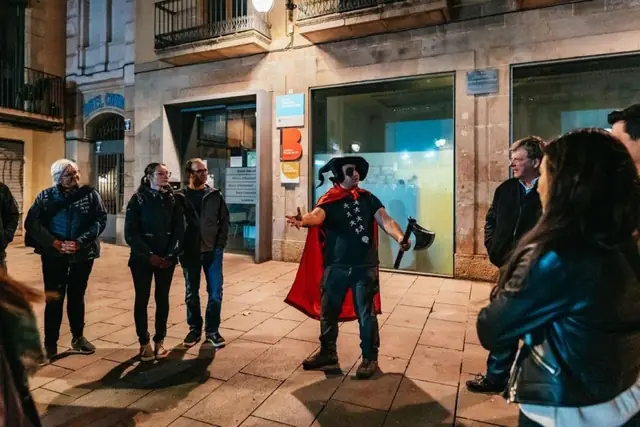
The Gothic Quarter is just as good at night. If you want the stories behind the streets, our ghosts and legends walk spends about 1 hour 30 minutes in the old town after dark, from €19. It covers the legend of the Vampire of Raval, the Liceu theater, Plaça de Sant Felip Neri and Plaça del Rei. It is family-friendly and recommended for ages 8 and over.
Barcelona Cathedral
The Gothic cathedral stands just off Plaça Nova, next to the old Roman wall. Its front was finished in the 19th century, so you can see several centuries of the city in one building. In the cloister live 13 white geese, one for each year of the life of Saint Eulalia, one of the city’s patron saints, whose crypt is under the altar.
Santa Maria del Mar
At the bottom of El Born, this 14th-century basilica is for many people the most beautiful church in the old town. The square around it is full of cafés, so it is a good place to stop. The nearest metro is Jaume I (line L4).
Santa Maria del Pi
Another Gothic church in the heart of the Gothic Quarter, named after the pine tree in its square, with a huge rose window. It is a short walk from La Rambla and Liceu metro (line L3).
The Temple of Augustus
Four Roman columns from the city’s largest temple, standing inside a medieval courtyard on Carrer del Paradís, between Plaça del Rei and Plaça de Sant Jaume. It is easy to walk past, so look for the small sign.
El Call, the old Jewish quarter
A few narrow streets near Plaça de Sant Jaume that were the medieval Jewish quarter. Many walking tours pass through it, which is the easiest way to find the hidden corners.
The Liceu theater
Barcelona’s opera house, on La Rambla next to Liceu metro, opened in 1847. It has burned down twice and been bombed once, which is why it appears in so many ghost stories.
La Boqueria market
Halfway down La Rambla, on the Raval side, the city’s most famous food market is a riot of fruit, seafood, ham and spices. Go in the morning, when it is busiest with locals. Our paella and tapas cooking class starts with a La Boqueria market stop (not on Sundays or public holidays), then you cook a paella and tapas, from €79.
Santa Caterina market
The other big market, with a colorful wavy roof, at the edge of El Born near the cathedral. It is calmer than La Boqueria and good for a slow look around.
Palau Güell and the Palau de la Música
Palau Güell, just off La Rambla on Carrer Nou de la Rambla, was one of Gaudí’s first big projects and is one of the few Gaudí buildings in the old town. The Palau de la Música Catalana, a concert hall from 1908 at the top of Via Laietana, is one of the most striking modernista buildings in the city. Both are UNESCO World Heritage sites.
Squares and streets in the old town
- La Rambla. The tree-lined street that splits the old town in two, with the Gothic Quarter on one side and El Raval on the other. Walk it once, then eat somewhere off it: many places right on La Rambla are aimed at tourists.
- Plaça Reial. A square of palm trees and arcades just off La Rambla, with two lampposts designed by a young Gaudí.
- Plaça del Rei. The medieval royal square, next to the city history museum.
- Plaça de Sant Jaume. The political heart of the city, home to the Catalan government and the city hall. During La Mercè festival in September, castellers build human towers here.
- Plaça de Sant Felip Neri. A small, quiet square where the walls still show the damage from a Spanish Civil War bombing. Our ghost walk stops here.
Eating well in the old town
Two quick rules for paella: it should take at least 20 minutes to arrive, because it is cooked to order, and it should come in its pan. A slightly crisp layer at the bottom (the socarrat) is a good sign. For tapas, do what locals do and move between two or three bars, ordering a few plates at each. Our Barcelona tapas guide has more on what to order. If you would rather someone else picked the bars, our tapas walking tour visits four local stops in the old town, each with food and a drink, in about 3 hours, from €66.
For a full evening, our tapas and flamenco evening pairs a 40-minute live flamenco show with a sit-down tapas dinner, from €59. See also where to see flamenco in Barcelona and what to do in Barcelona at night.
The new town: plan it in sections
North of Plaça de Catalunya, the city was rebuilt in the 19th century on a grid, the Eixample, and that is where most of Gaudí’s work is. It is much bigger than the old town, so pick a few sights, buy timed tickets ahead and use the metro between them.
The Sagrada Família
Gaudí’s basilica is the one sight almost everyone puts first. Construction began in 1882 and work is still going on. Book your ticket on the official site well ahead, as time slots sell out, and consider the audio guide or a guided visit so the details make sense. It has its own metro station.
Park Güell
Gaudí’s hillside park, with mosaic benches and a view over the whole city. The monumental area needs a timed ticket, so book ahead. It is reachable by bus, taxi, or metro plus an uphill walk.
Casa Batlló, Casa Milà and Passeig de Gràcia
Two Gaudí houses on the city’s grandest avenue, Passeig de Gràcia. Casa Milà (La Pedrera) is known for its wavy front and its rooftop of chimneys, and Casa Batlló for its colorful, bone-like facade. Passeig de Gràcia metro (lines L2, L3 and L4) is right there.
Gràcia
Gràcia was a separate town until the city grew around it, and it still feels like a village of small squares, independent shops and local bars. It is a good place for an evening drink away from the crowds.
Montjuïc
The hill above the port has the Montjuïc castle, the Olympic Stadium built for the 1929 International Exhibition and used for the 1992 Olympics, the National Art Museum of Catalonia above Plaça d’Espanya, and the Magic Fountain below it. The fountain show does not run every night, so check the official schedule. You can go up by funicular from the metro or by cable car, and the Port Cable Car crosses the harbor from Barceloneta.
Ciutadella Park and the Arc de Triomf
The city park at the edge of El Born has the Catalan Parliament, a big fountain and plenty of shade. The Arc de Triomf at its top end was built as the entrance to the 1888 Universal Exhibition.
Football
FC Barcelona plays at Spotify Camp Nou in Les Corts. The city’s second team, RCD Espanyol, plays in nearby Cornellà. Buy match tickets only from the clubs’ official sites.
The best viewpoints
- Bunkers del Carmel. Old Civil War anti-aircraft batteries on a hill behind Gràcia, with a 360-degree view. Access hours are limited, so check before you go.
- Tibidabo. The highest hill behind the city, with a church and an old amusement park on top.
- Montjuïc castle. Views over the port and the sea.
- The Columbus monument. At the bottom of La Rambla, with a small viewing platform at the top.
A day outside the city
With a spare day, the mountain monastery of Montserrat is the classic trip. Read is Montserrat worth visiting, or join our Montserrat day trip with a guide and transfers, about 6 hours, from €47. For the sea, see our beaches, boats and watersports guide.